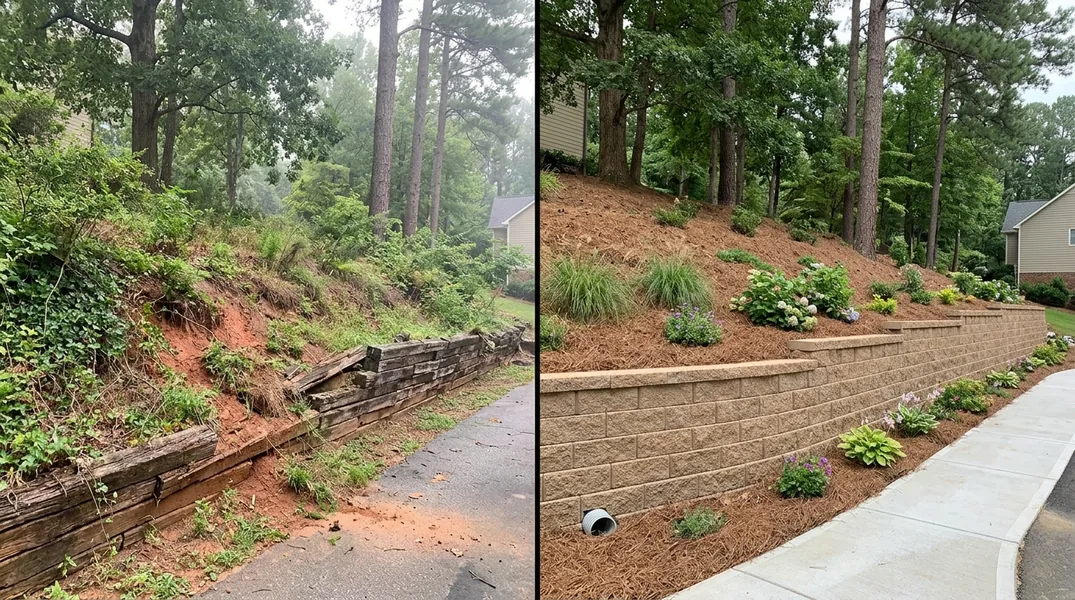
Why Raleigh's Summer Storms Are a Retaining Wall's Worst Enemy
If you live in Raleigh, you already know the pattern: a hot, humid summer afternoon suddenly turns dark, and within minutes the sky opens up. Those intense, short-duration thunderstorms dump enormous volumes of water in a very short time. Then, from June through November, hurricane season can add multi-day soaking rain events on top of already saturated ground. For a retaining wall, this combination is not just inconvenient weather. It is a structural stress test that many walls fail.
The reason is simple physics. When rain falls on the soil behind a retaining wall, that soil absorbs water like a sponge. Once the soil is saturated, the water has to go somewhere. If the wall was built without a proper drainage system, the water cannot escape. It builds up behind the wall and pushes outward with tremendous force. That force is called hydrostatic pressure, and it is the single most common reason retaining walls crack, lean, and eventually collapse in our area. A wall that looks perfectly fine in dry weather can be quietly failing every time it rains.
How Hydrostatic Pressure Quietly Destroys a Wall
Hydrostatic pressure retaining wall failures rarely happen overnight. The process is gradual and easy to miss until it is too late. Water trapped behind the wall increases the load the wall was never designed to carry. Most residential retaining walls are engineered to hold back soil, not a swimming pool's worth of water. As the pressure builds, the wall begins to move slightly. You might notice a small lean, a hairline crack in the mortar, or blocks that seem to have shifted a fraction of an inch. Homeowners often ignore these early warning signs because they seem cosmetic.
But each storm makes it worse. Water finds the cracks and widens them. The soil behind the wall softens and loses its stability. Eventually, the wall can bulge outward or shear apart. In the worst cases, a section collapses entirely after a heavy rain, sending soil and debris into the yard or driveway. The repair bill for a collapsed wall is always far higher than the cost of installing proper drainage in the first place. This is why Retaining Wall Repair professionals almost always find drainage issues at the root of the damage.
The Role of a Retaining Wall French Drain
The good news is that the solution is well understood. A retaining wall french drain is a simple but highly effective system that collects water behind the wall and carries it away before pressure can build. A proper system typically includes a perforated pipe at the base of the wall, surrounded by washed gravel, wrapped in filter fabric to keep soil out, and connected to an outlet that discharges water safely away from the wall. Some designs also include a drainage board against the back of the wall and weep holes to let any remaining moisture escape.
When this system is installed correctly, rainwater passes through the soil, enters the drain, and flows out instead of pushing against the wall. The wall stays dry, stable, and strong. The key word is correctly. A french drain that is too shallow, clogged with sediment, or sloped the wrong way can be worse than no drain at all because it gives homeowners a false sense of security. If you are planning a new wall, make sure drainage is part of the design from day one. If you have an existing wall, a professional can inspect it and tell you whether the drainage is working. You can request a free estimate to get an honest assessment.
Signs Your Retaining Wall Drainage Is Failing
Homeowners in Cary and Apex often ask how to tell whether their wall has a drainage problem. There are several reliable warning signs. Water pooling at the base of the wall after rain is a major red flag. So is soil that stays soggy for days behind the wall, or white mineral stains on the wall face that indicate water is seeping through. Cracks that appear or widen after storms, blocks that bulge outward, and a wall that leans even slightly are all signs that hydrostatic pressure is doing damage.
Another common sign is a clogged or missing outlet. If the french drain discharges nowhere, or if you cannot find an outlet at all, the system is likely not protecting the wall. In some older walls, there is no drainage system whatsoever. If you notice any of these issues, do not wait for the next hurricane season to test your luck. A professional inspection can identify the problem before a collapse happens. For walls that are already severely damaged, Retaining Wall Replacement may be the safer and more cost-effective option than repeated repairs.
Retaining Wall Installation Near Me: Getting Drainage Right the First Time
If you are planning a new retaining wall, the most important decision you will make is not the block color or the cap style. It is the drainage design. A wall built without proper drainage is a future repair job waiting to happen. Professional Retaining Wall Installation should always include a drainage plan tailored to your property's slope, soil type, and water flow. In the Wake Forest area, clay-heavy soils make drainage especially critical because water drains slowly and stays trapped behind walls longer.
This is where experience matters. A contractor who understands local storm patterns and soil conditions will design a wall that can handle a Raleigh downpour without fail. That may include a french drain, gravel backfill, filter fabric, and a clear outlet point. For taller walls or walls holding back significant grade, Concrete Retaining Walls can offer additional strength and durability. If you want to understand what a properly drained wall should cost, review the pricing information before you commit. And if you are ready to protect your property, call Raleigh Retaining Wall at (984) 789-5415 to schedule a consultation.
Looking for a professional retaining wall contractor in Raleigh? Raleigh Retaining Wall responds fast for all your retaining wall needs.
Get a Free QuoteOur services: Retaining Wall Installation · Retaining Wall Repair · Retaining Wall Replacement